 Power Banks

 Brother Printers


 IP PBXs



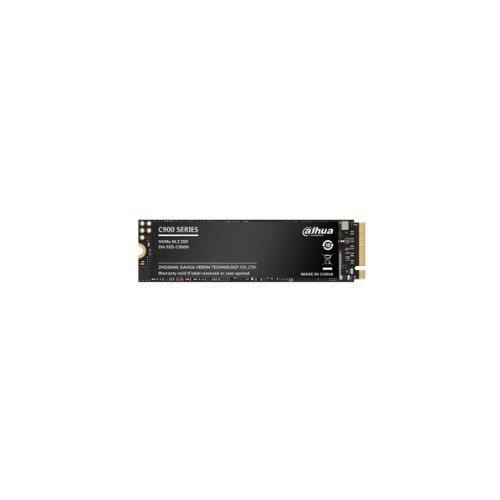

Dahua 128GB NVMe M.2 PCLe Gen3 X 4 Solid State Drive DHI-SSD-C900N128G
Key Features
Brand: Dahua
1,500,000 hours MTBF
Up to 1250 MB/s sequential read and Up to 650MB/s sequential writes
Supports PCIe3.0x4 and NVMe 1.3 protocol.
Supports LDPC ECC to enhance data reliability.
View information through S.M.A.R.T.
Adopts high-quality 3D NAND wafer level chip and with 4K LDPC technology, the program-erase cycle is effectively improved to extend service time.
Supports TRIM to improve read/write performance and speed.
Low power consumption management.
1 Year Warranty
Dahua 128GB NVMe M.2 PCIe Gen 3×4 2280 SSD (DHI-SSD-C900N128G): Ultimate High-Speed Professional Guide
The Dahua 128GB NVMe M.2 PCIe Gen 3×4 2280 SSD (DHI-SSD-C900N128G) is a powerhouse in the professional storage, system acceleration, and data infrastructure market. This high-efficiency solid-state drive eliminates legacy SATA controller bottlenecks while delivering crisp, clean data indexing speeds for modern ultrabooks, mini PCs, and desktop workstations. It serves as a reliable, heavy-duty solution designed to streamline operating system boot sequences, high-speed file transfers, and rapid application loading cycles for systems of all sizes. By utilizing advanced high-density 3D NAND flash memory technology, this flexible machine helps users boost daily computing productivity, reduce application launching downtime, and maintain a highly reliable workspace framework
Modern office workstations, budget gaming rigs, and enterprise terminals rely on this hardware to eliminate data access latency and automate system caching tasks without experiencing performance drops. Its robust, solid-state architecture ensures it handles demanding data cycles smoothly without overheating or risking the data failures common with traditional hard drives. System builders looking to scale their computing or caching framework find this device to be an indispensable asset for daily processing production.
This comprehensive guide covers everything you need to optimize this storage device for your business workflow.
Key Technical Specifications
Understanding your hardware capabilities helps you maximize your storage investment. The drive balances raw NVMe protocol speeds with long-term data safety configurations.
-
- Model Registry: Officially cataloged under the component serial identifier
- Form Factor: Standardized M.2 2280 architecture footprint measuring 22mm x 80mm
- Interface Link: High-speed PCIe Gen 3.0 x4 bus lanes supporting the NVMe 1.3 protocol
- Storage Capacity: 128GB volume optimized for boot partitions and high-speed cache storage
- Read Velocities: Sequential read tracking speeds reaching up to 2000 MB/s
- Write Velocities: Sequential data writing mechanics processing up to 1600 MB/s
- NAND Architecture: Premium multi-layer 3D NAND flash memory cells
- Reliability Metrics: High endurance thresholds backed by a 1,500,000-hour Mean Time Between Failures (MTBF) tracking standard
Top Features and Business Benefits
High-Density 3D NAND Flash Memory
The advanced 3D NAND wafer-level chip technology means you never experience the processing lag common with old hard drives or legacy SATA storage. It compiles operating system boot files and loads daily office suites at lightning speeds, keeping your enterprise pipeline moving without delay
Blazing-Fast PCIe Gen 3×4 Throughput
The built-in four-lane PCIe 3.0 bus connection allows the drive to transfer massive quantities of parallel instructions simultaneously. You can maximize your multi-window multitasking workflows comfortably without being tethered to unmanaged bus restrictions or experiencing performance stalls.
Compact M.2 2280 Architecture
Integrate the machine seamlessly into tiny computing spaces, ultra-thin business laptops, and space-constrained mini PC modules. This slim physical profile locks directly down onto motherboard circuit trays, eliminating bulky storage bays and messy internal power or data cables.
Advanced Data Integrity and Smart Shielding
Using specific 4K LDPC (Low-Density Parity-Check) error correction technology, the drive automatically detects and corrects coding data bit errors. This is ideal for highlighting critical corporate data protection, protecting system partition tables, and preventing file corruption during high-volume usage cycles.
Simple Step-by-Step Setup Guide
Follow these steps to get your internal M.2 NVMe solid-state drive installed and configured quickly.
Step 1: Unpack and Prepare the Chassis
Turn off your desktop or laptop terminal completely, disconnect the main AC electrical line, and remove your system side chassis or bottom panel access lid safely.
Step 2: Pin the Drive Into the Motherboard M.2 Slot
Locate the primary M.2 PCIe Gen 3 slot on the computer board circuit deck. Insert the gold contact finger pins of the Dahua SSD at a slight 30-degree angle directly into the terminal housing until it seats firmly.
Step 3: Fasten the Structural Retention Screw
Gently press the rear edge of the drive card down flat against the onboard standoff anchor. Use a precise screwdriver to lock the structural mounting screw firmly into place to prevent any accidental physical displacement.
Step 4: Configure Operating System Initialization
Boot your machine and open your native system disk management software panel application dashboard. Initialize the newly detected partition, designate your drive volume, and perform a quick format using your target file system layout to complete the device recognition process