 Power Banks


 Brother Printers


 IP PBXs



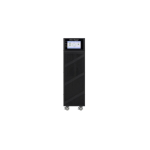
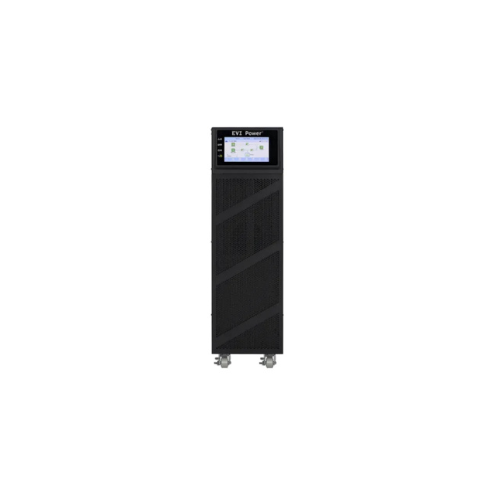

EVI 40000VA 36000W Tower Online 3 Phase UPS
Key Features
Brand:EVI
Technology: Online Double Conversion with DSP Control, 3 Phase Input & Output
Capacity: 40000VA / 36000W
Redundancy: N+X Parallel Redundancy, Supports up to 4 Units in Parallel
Input Range: 208–478V AC, Frequency 40–70Hz
Output: Power Factor 0.9, Oms Transfer Time
Functions: ECO Mode, Intelligent Charging Management, EPO Function, DC Start
Connectivity: USB, RS232, RS485, Parallel Port, Dry Contact, Optional SNMP/Relay Card
Display: 7” Touch LCD Display
Connections: Terminal Ports for Input/Output, Optional External Battery Pack
1 Year Warranty
Ultimate Guide to EVI 40000VA / 36000W Tower Online 3 Phase UPS
The EVI 40000VA / 36000W Tower Online 3 Phase UPS represents a heavy-duty industrial-grade power protection asset for massive enterprise infrastructure.
This ultra-high-capacity standalone system uses 3-phase electrical architecture to balance extreme workloads with flawless stability.
It delivers clean, continuous electricity to safeguard core cloud data centers, large-scale medical systems, and automated industrial manufacturing complexes.
This ultra-high-capacity standalone system uses 3-phase electrical architecture to balance extreme workloads with flawless stability.
It delivers clean, continuous electricity to safeguard core cloud data centers, large-scale medical systems, and automated industrial manufacturing complexes.
The Operational Advantages of a 3-Phase UPS Configuration
The defining technical upgrade of this EVI model is its 3-phase electrical architecture.
Unlike standard single-phase systems that rely on one alternating current waveform, a 3-phase UPS utilizes three separate electrical phases.
These phases are overlapping and offset by 120 degrees, ensuring continuous power delivery that never drops to zero.
Unlike standard single-phase systems that rely on one alternating current waveform, a 3-phase UPS utilizes three separate electrical phases.
These phases are overlapping and offset by 120 degrees, ensuring continuous power delivery that never drops to zero.
This configuration allows the system to harvest electrical energy with much higher efficiency from the main utility grid.
It reduces the thickness and size of required copper cabling while allowing for significantly lower installation and wiring costs.
For facilities running heavy machinery or large groups of blade servers, 3-phase distribution prevents localized phase overloads.
It balances the incoming load across the facility infrastructure, mitigating harmonic distortion and maximizing utility transformer efficiency.
It reduces the thickness and size of required copper cabling while allowing for significantly lower installation and wiring costs.
For facilities running heavy machinery or large groups of blade servers, 3-phase distribution prevents localized phase overloads.
It balances the incoming load across the facility infrastructure, mitigating harmonic distortion and maximizing utility transformer efficiency.
Tower Form Factor Benefits for Floor Deployment
While rack-mount hardware is built specifically for server enclosures, the tower form factor offers distinct installation advantages.
A standalone tower configuration requires no expensive structural rack cabinets or complex rail systems to set up.
It sits securely on any flat floor surface, reinforced utility shelf, or dedicated operational platform.
A standalone tower configuration requires no expensive structural rack cabinets or complex rail systems to set up.
It sits securely on any flat floor surface, reinforced utility shelf, or dedicated operational platform.
This independent design makes the EVI 40000VA tower ideal for building maintenance rooms, distributed branch offices, and clinical laboratories.
The physical chassis optimizes vertical airflow patterns, using heavy-duty internal fans to draw cool air from the front grill and exhaust it through the rear panel.
This efficient structural thermal management allows the unit to run continuously under full load without raising the ambient temperature of adjacent office workstations.
The physical chassis optimizes vertical airflow patterns, using heavy-duty internal fans to draw cool air from the front grill and exhaust it through the rear panel.
This efficient structural thermal management allows the unit to run continuously under full load without raising the ambient temperature of adjacent office workstations.
High-Density Capacity and Advanced Power Factor Efficiency
Modern enterprise systems require massive power reserves to handle complex computing workloads and data processing arrays.
The defining feature of this EVI model is its optimized 0.9 power factor design.
This advanced engineering allows the 40000VA apparent power capacity to deliver a full 36000W of active, real work power.
The defining feature of this EVI model is its optimized 0.9 power factor design.
This advanced engineering allows the 40000VA apparent power capacity to deliver a full 36000W of active, real work power.
This high efficiency ratio ensures that the internal rectifier and inverter operate with minimal internal electrical resistance.
Eliminating wasted electrical energy directly reduces heat generation inside the heavy-duty tower chassis.
Lower thermal output protects critical internal components from thermal stress, prolongs capacitor lifespans, and reduces overall localized air conditioning costs.
Eliminating wasted electrical energy directly reduces heat generation inside the heavy-duty tower chassis.
Lower thermal output protects critical internal components from thermal stress, prolongs capacitor lifespans, and reduces overall localized air conditioning costs.
Why Mission Critical Systems Require Online Double Conversion
Enterprise network hardware demands absolute voltage stability to prevent system lockups and hardware degradation.
Standard line-interactive backup power supplies introduce a minor millisecond delay when switching to battery power.
This brief drop can cause edge computing nodes and hyper-converged infrastructure to crash.
Standard line-interactive backup power supplies introduce a minor millisecond delay when switching to battery power.
This brief drop can cause edge computing nodes and hyper-converged infrastructure to crash.
The EVI 40000VA system utilizes a continuous online double-conversion process to eliminate this vulnerability entirely.
Incoming alternating current is converted to direct current to charge the battery bank and feed the inverter.
The internal inverter then regenerates a pristine, noise-free alternating current output for the equipment rack.
Because the inverter is permanently connected to the output load, utility outages cause zero transfer time.
Incoming alternating current is converted to direct current to charge the battery bank and feed the inverter.
The internal inverter then regenerates a pristine, noise-free alternating current output for the equipment rack.
Because the inverter is permanently connected to the output load, utility outages cause zero transfer time.
This comprehensive electrical isolation blocks power surges, line noise, frequency variations, and brownouts.
It acts as an active firewall against utility grid instability, ensuring smooth operational continuity for high-availability networks.
It acts as an active firewall against utility grid instability, ensuring smooth operational continuity for high-availability networks.
Key Technical Specifications
The EVI 40000VA 3-phase tower UPS balances massive output density within a compact, floor-optimized footprint.
The system features standard internal bypass mechanisms to maintain load power even during maintenance events.
The system features standard internal bypass mechanisms to maintain load power even during maintenance events.
- Power Capacity: 40000VA total apparent power.
- Active Power: 36000W total real power output.
- Power Factor: 0.9 efficiency ratio.
- Form Factor: Standalone vertical tower configuration.
- Topology: True online double-conversion technology.
- Phase Configuration: 3-phase input and single-phase or 3-phase balanced output.